
- All
- Product Name
- Product Keyword
- Product Model
- Product Summary
- Product Description
- Multi Field Search



Views: 0 Author: Site Editor Publish Time: 2026-06-30 Origin: Site


Underground mining operates in a high-stakes environment where precision rules everything. A single point of failure in an LHD (Load Haul Dump) machine can instantly halt entire production schedules. Every hour a loader sits idle strips immense value from an active mining operation. Sourcing replacement components goes far beyond a simple plug-and-play process. Variations in manufacturing years, brutal operational environments, and sudden component supersessions make part compatibility a critical engineering concern. Installing mismatched components directly triggers cascading mechanical disasters deep underground.
This guide explores how strict compatibility checks protect fleet integrity and ensure operator safety. We will examine core matching dimensions, procurement frameworks, and red flags to watch for during procurement. You will learn actionable strategies to maximize equipment uptime while preventing catastrophic failures.
Incompatible parts lead to cascading mechanical failures, resulting in exponential downtime costs in underground operations.
True compatibility extends beyond physical fit to include hydraulic tolerances, electronic handshakes, and metallurgical durability.
Rigorous verification frameworks (cross-referencing serial numbers, reviewing OEM updates, validating inspection certs) mitigate procurement risks.
Evaluating underground loader spare parts requires balancing immediate availability with long-term operational compliance.
Procurement teams often face immense pressure to keep machines running. However, rushing the selection of underground loader spare parts introduces massive operational vulnerabilities. A component appearing visually identical on a workbench might behave entirely differently under extreme load. These hidden mismatches drain profitability through unpredictable failures.
Micro-mismatches in mechanical components lead to rapid, unavoidable failures. Consider a hydraulic seal manufactured just a fraction of a millimeter out of specification. Once installed, it may hold pressure temporarily. Yet, repeated thermal cycling causes fluid bypass, eventually shutting down the entire boom function. Breaking down deep underground complicates matters exponentially. Mechanics cannot easily tow a dead 30-ton loader up a narrow, inclined ramp. Retrieval logistics alone consume hours or days. During this window, blasting schedules stall, material transport stops, and operational losses accumulate rapidly.
An out-of-spec part forces adjacent components to overcompensate. Mechanical systems distribute stress evenly across designed contact points. Introducing a mismatched element disrupts this equilibrium. If you install an axle shaft featuring incorrect spline angles, the differential gears absorb unnatural friction. The immediate replacement part might survive, but the broader mechanical system degrades prematurely. We regularly see minor compatibility oversights destroy major drivetrain assemblies months later. You end up replacing entire transmissions instead of a single shaft.
Mining environments tolerate zero margins for error regarding personnel safety. Using unverified parts in confined, hazardous spaces invites catastrophic danger. Brake system components lacking exact frictional coefficients can fail during steep declines. Hydraulic hoses mismatched for specific fluid temperatures risk sudden thermal events or fires. Furthermore, installing incompatible elements often violates strict regulatory frameworks. Inspectors enforcing MSHA or OSHA standards routinely penalize operations discovering non-compliant equipment modifications. Operator safety relies entirely on predictable machine behavior.
Validating Scooptram Spare Parts demands multi-layered analysis. True part matching extends far beyond matching physical shapes. Engineers evaluate four distinct technical dimensions to guarantee seamless integration.
Physical geometry dictates baseline installation. You must verify exact mounting points, thread pitches, and physical clearances. Precision matters immensely. A "close enough" fit guarantees damaging vibration harmonics. If a pin and bushing combination allows excessive lateral play, the resulting shock loads will fracture the loader arms. Technicians utilize micrometers and coordinate measuring machines (CMM) to confirm dimensional accuracy. Missing a tolerance by a single millimeter drastically alters the mechanical load path.
Common Mistake: Relying solely on tape measures or visual inspections. Always demand exact engineering blueprints or digital caliper measurements when verifying critical dimensional metrics.
A part perfectly matched in size will still fail if manufactured from inferior steel. You must carefully assess material hardness, specialized heat treatments, and overall tensile strength. Underground loaders operate amidst highly abrasive muck and corrosive acidic water. Components must survive continuous impact and grinding friction. If an original gear utilizes case-hardened 4340 alloy steel, replacing it using standard mild steel guarantees immediate shearing under peak torque.
Fluid power drives the heavy lifting capabilities of modern loaders. Evaluators must ensure exact flow rates, pressure ratings, and chemical fluid compatibility. High-pressure systems operate under extreme constraints. Incorrect directional valve sizing restricts fluid dynamics, which eventually destroys hydraulic pumps through cavitation. Furthermore, O-rings must match the specific chemical makeup of the hydraulic fluid used on-site. Nitrile seals exposed to incompatible synthetic fluids will swell, degrade, and rupture.
Modern equipment relies heavily on integrated digital networks. Sensors, Electronic Control Modules (ECMs), and complex wiring harnesses must communicate seamlessly. Proprietary diagnostic systems constantly monitor voltage thresholds and resistance values. If a replacement sensor sends a signal outside the anticipated parameter, the ECM will instantly trigger a limp-mode fault code. Compatibility here means verifying CAN-bus protocols, firmware versions, and precise pinout configurations. You cannot bypass electronic handshakes without crippling the machine's automated safety limiters.
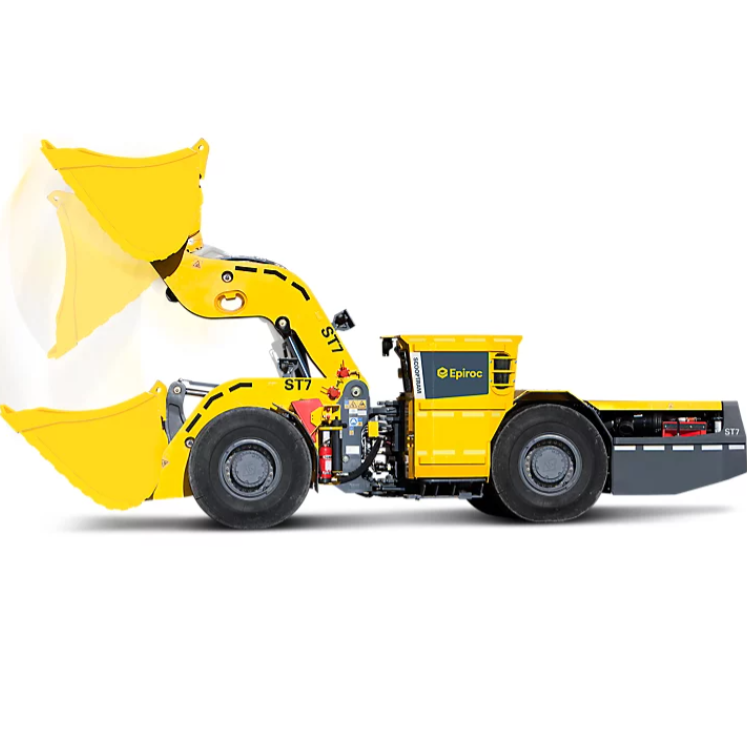
Maintenance managers continuously navigate the complex divide between original equipment manufacturer (OEM) channels and aftermarket alternatives. Making an informed choice requires objective evaluation criteria.
OEM components establish the ultimate baseline for compatibility. They offer guaranteed fitment because they originate from the identical engineering blueprints used to build the loader. These items maintain comprehensive warranty protection and eliminate guesswork. However, they carry significant drawbacks. The initial acquisition cost runs exceptionally high. Additionally, reliance on rigid global supply chains often causes severe lead-time delays, leaving machines grounded while waiting for factory shipments.
Premium aftermarket manufacturers provide compelling alternatives, provided they adhere to strict engineering standards. Safely considering non-OEM replacements involves verifying specific credentials.
ISO Certifications: Ensure the manufacturing facility operates under ISO 9001 quality management systems.
Reverse-Engineering Accuracy: Look for suppliers utilizing 3D laser scanning and advanced metallurgical spectroscopy to duplicate original parts accurately.
Proven Field Testing: Demand case studies showing successful deployment in similar underground environments.
Evaluation Dimension | OEM Components | Premium Aftermarket | Low-Tier Aftermarket |
|---|---|---|---|
Fit Guarantee | 100% exact match | Engineered to original specs | High risk of tolerance deviations |
Availability | Subject to factory backorders | Generally high inventory levels | Widely available, varying quality |
Warranty Support | Comprehensive global coverage | Strong vendor-backed warranties | Minimal or non-existent support |
Manufacturers frequently update internal part numbers as they revise engineering designs. This practice creates the "superseded part" trap. A newly numbered component might replace an older version, but you must verify backward compatibility. Sometimes a superseded part requires an additional adapter bracket or updated software flash. Never assume a new number simply bolts onto an older loader model. Always consult direct engineering bulletins to trace the exact supersession chain before purchasing.
Best Practice: Maintain a living document tracking all superseded part numbers across your fleet. Cross-reference these changes during every routine maintenance audit.
Removing guesswork from the procurement process requires a structured methodology. Implement this strict four-step framework to shortlist and verify components effectively.
Mandate the use of the machine’s specific Vehicle Identification Number (VIN), serial number, and exact build sheet. Relying solely on the make and model invites disaster. Manufacturers constantly tweak production lines mid-year. A loader built in March might feature a different hydraulic manifold than the identical model built in November. The serial number unlocks the exact engineering DNA of your specific machine.
Demand explosive-view diagrams from your suppliers. These detailed schematics confirm the exact position, orientation, and functional integration of the requested component. Visualizing the assembly stack prevents ordering sub-components incorrectly. It also highlights ancillary items you might need simultaneously, such as specialized locking nuts, gaskets, or retaining rings.
Treat quality control transparency as a non-negotiable requirement. Instruct buyers to request comprehensive documentation before issuing any Purchase Order. You should review metallurgical test reports, dimensional CMM inspection logs, and explicit fitment guarantees. Reliable suppliers gladly share these documents. If a vendor hesitates to provide physical proof of their quality assurance process, immediately disqualify them from your supply chain.
Advise your maintenance crews on vital pre-installation best practices. Mechanics should measure and dry-fit all parts before applying sealants or torqueing bolts. Use precision calipers to compare the new item directly against the removed component. Check thread depths, verify sensor connector pin alignments, and test physical clearances manually. Catching a micro-mismatch on the workbench saves hours of frustrating disassembly later.
Experience in heavy machinery maintenance reveals several warning signs during the purchasing cycle. Recognizing these red flags prevents catastrophic installations.
Beware of suppliers using excessively broad marketing language. Phrases like "fits most 10-ton underground loaders" signal severe engineering shortcuts. Precision machinery does not utilize universal fits. Legitimate suppliers always list exact serial number ranges and specific model year compatibilities. Reject any component lacking precise application data.
Traceability guarantees accountability. Reject parts arriving without proper identification stamps, laser-etched batch numbers, or clear manufacturing origins. When a component fails prematurely, engineers rely on batch numbers to identify metallurgical flaws or machining errors. Untraceable parts represent a complete blind spot in your quality management system. They belong in the scrap bin, not inside your critical fleet.
A part proving perfectly compatible on paper may still fail in reality. Buyers often ignore the specific environmental context of their mine. Deep shafts experience extreme ambient heat, abrasive airborne dust, and highly corrosive groundwater. You must verify the component handles your specific micro-climate. Standard rubber hoses crack rapidly in high-heat zones. Ensure the supplier rates the part for the exact temperature, humidity, and atmospheric conditions unique to your operation.
Strict compatibility checks are definitely not administrative red tape. They form the absolute baseline for profitable, predictable, and safe underground mining operations. Overlooking minor dimensional or electronic mismatches directly results in catastrophic equipment failure and exponential downtime costs. True operational resilience requires treating part verification as a core engineering discipline.
Your immediate next step is auditing your current supply chain protocols. Compile accurate, updated serial number manifests for every machine in your fleet. Empower your procurement team to demand explicit quality control documentation. By partnering exclusively with suppliers who transparently verify technical compatibility, you protect your fleet, secure your operators, and drastically improve your operational uptime.
A: Consult the OEM parts manual using the machine's unique serial number. Equipment designs change frequently mid-production. Always check for superseded numbers by cross-referencing your serial data with the manufacturer's latest engineering bulletins to ensure backward compatibility.
A: Yes, but only if the manufacturer adheres to strict reverse-engineering tolerances. They must utilize equivalent or superior metallurgical grades and provide verified quality control testing documentation, such as ISO certifications and CMM inspection logs.
A: Installing incorrect pressure-rated components triggers severe hydraulic system failure. It causes rapid seal blowouts, fluid leaks, and cavitation. This ultimately leads to massive contamination of the entire fluid system and destroys expensive hydraulic pumps.
A: Premium suppliers utilize 3D laser scanning technology, historical blueprint archives, and advanced metallurgical spectroscopy. They reverse-engineer the original worn component to establish precise operational specifications, allowing for accurate custom fabrication.
