
- All
- Product Name
- Product Keyword
- Product Model
- Product Summary
- Product Description
- Multi Field Search


Views: 0 Author: Site Editor Publish Time: 2026-04-22 Origin: Site


In construction and mining, equipment performance is never judged by power alone. What really matters is whether a machine can keep working under pressure, adapt to different jobsite conditions, support long operating cycles, and control total ownership costs over time. That is why the engine selection behind heavy-duty equipment is such a critical decision. For contractors, mine operators, equipment dealers, and fleet managers, the right industrial engine can influence fuel efficiency, uptime, maintenance planning, environmental compliance, and jobsite productivity all at once.
Among the industrial diesel engines commonly discussed for demanding applications, the Cat C11 Industrial Diesel Engine stands out as a practical and proven option for a wide range of equipment. With a power range of 242–338 bkW (325–450 bhp) at 1800–2100 rpm, this engine is well suited to industrial environments that require dependable output, durability, and application flexibility. It is commonly associated with construction machinery, mining equipment, underground operations, loaders, cranes, hydraulic power units, material handling systems, drill rigs, and crushers. Its emissions profile, aligned with China Stage II, EPA Tier 3 equivalent, and EU Stage IIIA equivalent standards, also makes it relevant for buyers serving different global markets.
So, why should buyers and project operators choose the Cat C11 Industrial Diesel Engine for construction and mining equipment? The answer lies in a balanced combination of power range, application flexibility, control capability, durability, and industry-oriented design. This article takes a closer look at what makes this engine suitable for heavy-duty environments and why it continues to be a compelling choice for demanding industrial machinery.
Construction and mining projects create some of the toughest operating conditions for any power system. Machines often work in dust, vibration, steep terrain, changing temperatures, and long-duty cycles. In many cases, they are also expected to perform under unpredictable loads. A wheel loader may move from light transport to dense material handling in the same shift. A drill rig may require stable power delivery during precision operation, while a crusher needs dependable torque and endurance for continuous production. Underground equipment adds another layer of complexity because ventilation, space limitations, and maintenance accessibility all become major considerations.
That is why buyers rarely choose an engine based only on nameplate horsepower. They need an engine platform that fits real operating logic. In this environment, an industrial diesel engine must do several things well:
Provide enough output for the intended machine class
Maintain stable operation across varying loads and working conditions
Support reliability over long service cycles
Offer suitable control features for modern industrial equipment
Align with target market emission requirements
Help reduce downtime and support manageable maintenance routines
The Cat C11 Industrial Diesel Engine fits this decision framework well because it is not positioned as a niche engine for one narrow purpose. Instead, it is presented as a broadly applicable industrial engine that bridges performance, durability, and equipment integration for multiple heavy-duty sectors.
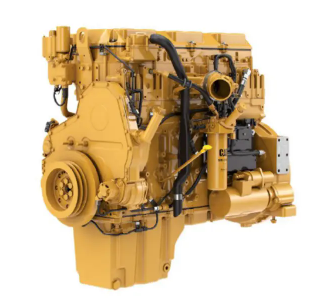
One of the first reasons to consider the Cat C11 Industrial Diesel Engine is its practical power band. With ratings from 242 to 338 bkW, or 325 to 450 bhp, it occupies an especially useful range for mid-to-heavy industrial equipment. This is enough power for a broad category of machines without moving immediately into the highest-output engine class.
For equipment manufacturers and fleet buyers, this matters because power matching is essential. An engine that is too small can create performance limitations, high stress, and operational inefficiency. An engine that is oversized may increase cost, packaging complexity, and fuel consumption relative to the task. The Cat C11 sits in a range that makes sense for many high-demand machines used in construction and mining, especially where consistent industrial power is required rather than extreme peak output.
Engines in the C11 class can serve equipment that must perform substantial work every day while still staying within a manageable size and system integration profile. That gives project owners and equipment builders an appealing balance. They can support robust machine capability while keeping the engine package relevant to applications such as loaders, compressors, cranes, crushers, and hydraulic power units.
Because the operating range is associated with 1800–2100 rpm, the engine is well suited to industrial working conditions where dependable rated performance is essential. This helps support machine productivity in environments where equipment must maintain stable operation over long shifts rather than simply deliver short bursts of power.
Another major reason to choose the Cat C11 Industrial Diesel Engine is its broad application range. It is widely used in:
Drill rigs
Compressors
Construction equipment
Cranes
Crushers
General industrial machinery
Hydraulic power units
Loaders
Material handling equipment
Mining machinery
Underground mining equipment
This variety is important. It indicates that the Cat C11 Industrial Diesel Engine is not limited to one machine architecture or one type of end user. Instead, it has the characteristics needed for many industrial operating scenarios. This also strengthens its relevance for common B2B search intents such as construction engine solutions, mining engine replacement, power for hydraulic systems, diesel engines for crushers, and engines for underground mining machinery.
Construction projects often require versatile equipment fleets that can handle earthmoving, lifting, material transfer, and support tasks across changing jobsite conditions. Engines used in this sector must be rugged, responsive, and suitable for long working hours. A power unit like the Cat C11 can support these needs by providing a balanced output level suitable for different machine categories while maintaining a durability-oriented industrial profile.
Mining environments place intense pressure on machinery. Surface and underground equipment must work through dust, vibration, heavy loads, and harsh shift schedules. Underground mining equipment in particular needs dependable power because maintenance access may be harder and downtime can affect wider production operations. That is one reason the Cat C11 Industrial Diesel Engine has strong relevance in this space.
The Cat C11 is often associated with powerful and reliable performance, along with the advantage of reliable, quiet and durable power. In real industrial purchasing decisions, these characteristics matter because they point to the engine’s role in uptime management.
Construction and mining operations do not simply buy engines; they buy productive operating hours. Every unexpected shutdown has a cost. It may delay a project schedule, reduce material throughput, interrupt drilling or crushing operations, or affect downstream workflows. For that reason, reliability is often more valuable than headline specifications alone.
An industrial engine built around proven core design principles and manufacturing quality offers practical benefits such as:
Reduced risk of disruption during continuous duty cycles
More confidence in heavy-load applications
Better suitability for industrial fleets that depend on predictable maintenance planning
Stronger long-term value when equipment is used intensively
Durability is equally important. Construction and mining machines are often expected to remain productive over years of service, not just months. A durable industrial engine supports this expectation by helping operators protect asset value and avoid premature lifecycle replacement costs.
Emission requirements have become an increasingly important part of industrial engine selection. In international markets, buyers often need engines that align with different regulatory standards depending on destination region, machine use, and project requirements. The Cat C11 Industrial Diesel Engine is commonly associated with China Stage II, U.S. EPA Tier 3 equivalent, and EU Stage IIIA equivalent standards.
This is valuable because it improves market flexibility. Distributors, equipment integrators, and export-focused suppliers frequently need engine solutions that fit project requirements across countries. An engine platform associated with multiple emissions references can make product planning and market positioning easier.
Emission standards are not only about legal approval. They also influence where equipment can be sold, how it is accepted by project owners, and how attractive it is in competitive bidding. In some markets, even when regulations are not the only deciding factor, buyers still prefer engines that reflect recognized emissions benchmarks because it signals technical maturity and broader international usability.
For companies serving global industrial customers, that can become a commercial advantage. A machine package built around the Cat C11 Industrial Diesel Engine may appeal to a wider range of buyers because it fits both performance needs and compliance expectations in many industrial environments.
Modern construction and mining machinery requires more than mechanical strength. Equipment builders and operators increasingly value engine control capabilities that improve machine responsiveness, diagnostics, and operational management. One of the stronger aspects of the Cat C11 is the control-oriented feature set commonly associated with this engine platform.
Key control-related features often highlighted include:
Electronic governing with PTO speed control
Programmable ratings
Automatic altitude compensation
Power compensation for fuel temperature
Programmable low and high idle and total engine limit
Electronic diagnostics and fault logging
SAE J1939 engine monitoring system broadcast and control
ADEM A4 Electronic Control Unit (ECU)
This is a meaningful feature set in industrial applications because engine performance today is closely tied to system-level integration.
Construction and mining machines often have different load profiles and operational priorities. A drill rig does not behave like a wheel loader. A compressor does not behave like a crusher. Features such as programmable ratings and programmable idle limits allow the engine platform to be adapted more effectively to the machine’s working requirements.
Electronic diagnostics and fault logging are important in fleets where uptime matters. Service teams benefit from better visibility into engine behavior, while operators can identify issues faster and plan maintenance more effectively. This reduces uncertainty and can help lower service-related downtime.
Construction and mining activities often occur in variable environments, including high-altitude areas or regions with temperature fluctuations. Automatic altitude compensation and fuel temperature-related power compensation help protect usable performance under changing site conditions. That makes the Cat C11 Industrial Diesel Engine more practical for real project environments rather than only laboratory conditions.
The standard equipment profile also helps explain why the Cat C11 is attractive for construction and mining equipment.
The engine is commonly configured with a turbocharged and air-to-air aftercooled setup. This kind of arrangement supports efficient combustion and improved intake air management, which is important for maintaining industrial performance under load.
The cooling arrangement is associated with thermostats and housing, vertical outlet, jacket water pump, centrifugal, and water pump, inlet. Reliable cooling performance is essential in construction and mining applications because machines may run for long periods under substantial thermal stress. Cooling design has a direct effect on engine stability and durability.
The fuel system is typically linked with MEUI injection, a secondary fuel filter (2 micron), and ACERT technology. This reflects attention to fuel delivery precision and filtration quality, both of which are important for efficient operation and long-term system health.
The engine is also associated with an SAE No. 1 flywheel housing, which is relevant for compatibility and equipment integration in many industrial installations.
When buyers review an engine for construction or mining use, these supporting specifications often matter nearly as much as headline power ratings. They influence packaging, service access, machine design, and operating confidence.
The Cat C11 Industrial Diesel Engine is often selected for applications that demand both performance and efficiency. In construction and mining, fuel efficiency has direct commercial impact. Engines operate over long shifts, sometimes across large fleets, so even moderate efficiency improvements can influence total operating cost over time.
Fuel consumption should never be viewed in isolation from workload. What fleet owners really need is useful efficiency: an engine that produces the required output without unnecessary waste and without compromising reliability. A well-matched engine in the Cat C11 class can help businesses control cost per operating hour while maintaining productivity.
This is especially relevant in sectors like mining and material handling, where equipment utilization is high and machine fleets represent major capital investment. Operators want engines that support strong production without turning fuel cost into a major burden. An industrial diesel engine that combines dependable power, appropriate rating flexibility, and stable operating characteristics becomes much more attractive in that context.
The value of the Cat C11 Industrial Diesel Engine is not limited to one type of buyer. Different stakeholders can find different reasons to choose it.
OEMs need engines that integrate well, support varied applications, and align with target market requirements. The broad application scope, programmable control features, and industry-friendly specification profile make the Cat C11 appealing for machine builders developing products for construction and mining customers.
Dealers benefit from products with clear market fit. Because the Cat C11 connects to multiple industrial use cases, it supports a wider commercial conversation with customers. It is easier to position an engine when its application range is broad and its product story is clear.
End users care most about productivity, durability, serviceability, and lifecycle value. The Cat C11’s market positioning around reliable power, broad application range, diagnostics, and emissions compliance helps address those concerns directly.
Within industrial diesel engine planning, there is always a need to match engine class to equipment duty. Some applications need extremely high-output engines, while others benefit from a more balanced middle-high power solution. The Cat C11 Industrial Diesel Engine occupies a highly practical segment because it can support serious industrial workloads without immediately moving into the largest engine category.
That makes it especially suitable for businesses that need substantial performance but also want flexibility across multiple machine platforms. In other words, the Cat C11 is attractive not because it is the biggest engine available, but because it is often the right-sized engine for a broad range of construction and mining equipment.
Choosing the right industrial engine is ultimately about matching capability to real-world work. The Cat C11 Industrial Diesel Engine is a compelling option for construction and mining equipment because it combines a useful heavy-duty power range, wide application compatibility, dependable performance, practical emissions positioning, and advanced control features that support modern industrial equipment integration. It is the kind of engine that fits the operating logic of today’s demanding job sites: long working hours, variable conditions, high uptime expectations, and strong pressure to balance output with cost control.
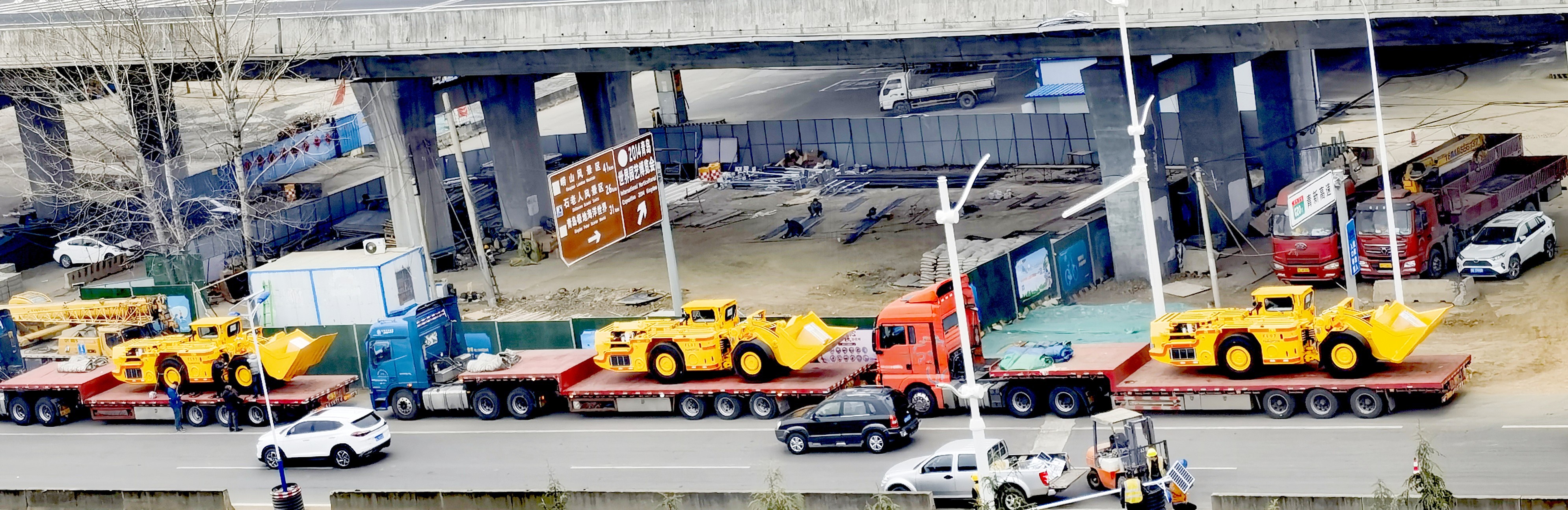
For buyers looking at engines for loaders, drill rigs, crushers, cranes, hydraulic power units, material handling systems, and mining machinery, the Cat C11 offers a strong foundation for productivity-oriented equipment design and operation. And for companies sourcing complete mining vehicles, industrial power solutions, and related spare parts, working with an experienced supplier matters just as much as choosing the right engine. Hambition Drivetrain Components & Parts Co., Ltd focuses on one-stop solutions for mining vehicles and spare parts, supplying products such as scooptrams, dumpers, drill rigs, scalers, man buses, service trucks, and key parts for heavy-duty applications. With more than 20 years of industry experience and service support reaching customers in multiple international markets, Hambition is positioned to help global buyers source practical equipment and component solutions for construction and mining projects.
The Cat C11 Industrial Diesel Engine is mainly used for industrial applications such as drill rigs, compressors, construction equipment, cranes, crushers, hydraulic power units, loaders, material handling equipment, mining machinery, and underground mining equipment. Its application range makes it a flexible solution for both construction and mining sectors.
The engine offers ratings from 242–338 bkW (325–450 bhp) at 1800–2100 rpm. This power range makes it suitable for mid-to-heavy industrial equipment that requires dependable performance under demanding working conditions.
The engine is suitable for mining equipment because it is positioned as powerful, reliable, and durable, with a design that supports heavy-duty industrial use. It is also widely associated with mining machinery and underground mining equipment, which gives it strong relevance for harsh operating environments.
Yes. The Cat C11 Industrial Diesel Engine is commonly associated with China Stage II, EPA Tier 3 equivalent, and EU Stage IIIA equivalent emission standards. This helps improve its suitability for different regions and export-oriented equipment applications.
Buyers should consider not only the engine specifications, but also application matching, emissions requirements, service support, spare parts availability, and supplier experience. A reliable supplier with knowledge of construction and mining equipment can help customers choose the right engine-related solution for their machine type, operating environment, and long-term maintenance needs.
