
- All
- Product Name
- Product Keyword
- Product Model
- Product Summary
- Product Description
- Multi Field Search


Views: 0 Author: Site Editor Publish Time: 2026-08-02 Origin: Site


Unplanned downtime in a 24/7 mining operation costs tens of thousands of dollars per hour. A scheduled engine overhaul is the most effective defense against catastrophic failure. Overhauls frequently exceed scheduled downtime windows due to fragmented procurement, supply chain bottlenecks, and the discovery of unexpected wear requiring parts that are not on-site.
A meticulously structured overhaul parts plan ensures technical teams have the exact components required to execute a seamless rebuild and restore baseline reliability. By categorizing mandatory replacements, conditional parts, and consumables, maintenance managers can eliminate delays. This guide breaks down exactly what needs to be included in a mining engine overhaul parts plan to guarantee maximum uptime.
A comprehensive overhaul plan must categorize components into mandatory replacements (e.g., bearings, rings), conditional replacements (e.g., camshafts), and consumables.
Evaluating suppliers for heavy-duty engine parts requires analyzing material metallurgy, warranty compliance, and guaranteed lead times, not just upfront unit costs.
Pre-teardown staging and contingency planning for major structural damage (like block machining) are critical to mitigating schedule overruns.
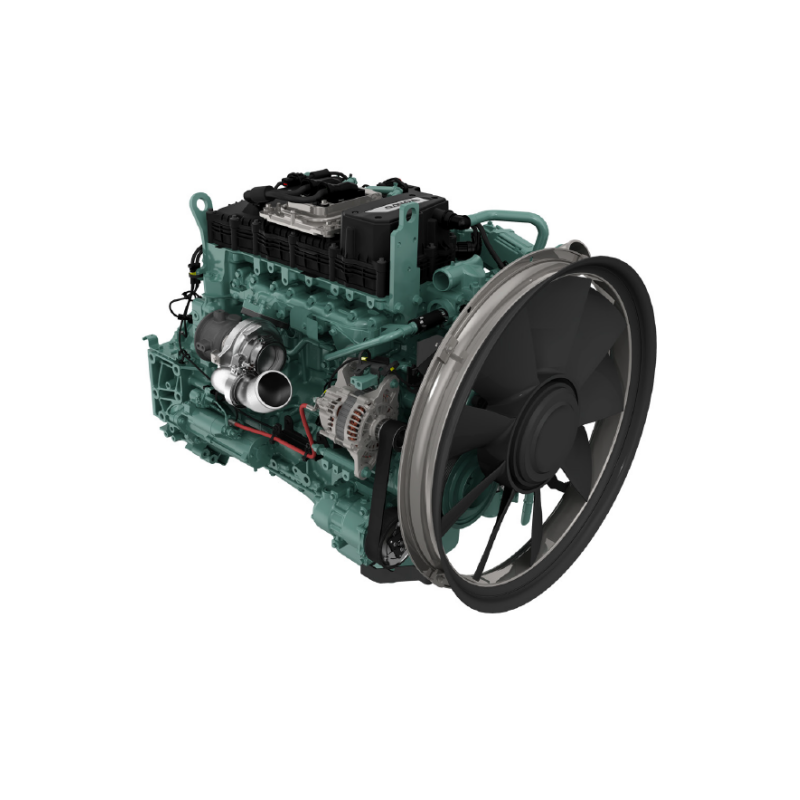
Specific industrial engines, such as the Volvo Penta TAD582VE Engine, require tailored replacement strategies based on their unique duty cycles and operational environments.
Modern parts planning should leverage digital tracking and asset management systems (CMMS) to align parts procurement with real-time telematics and predictive wear data.
Establishing the baseline goals of the overhaul before procurement begins dictates the entire trajectory of the project. The primary objective is balancing the upfront cost of comprehensive parts replacement against the financial risk of premature secondary failures. A poorly planned rebuild often results in missing components, extending downtime by days or weeks while waiting for a single gasket or thrust washer. You must define what constitutes a successful rebuild for your specific site conditions.
Utilizing oil analysis, blow-by measurements, and operational hours helps determine the necessary scope of the overhaul. Spectrometric oil analysis reveals microscopic wear metals. High iron content typically indicates cylinder liner or camshaft wear, while elevated copper or lead points directly to main and rod bearing degradation. Measuring crankcase pressure with a manometer provides a direct assessment of piston ring sealing efficiency. This data dictates whether an in-frame rebuild is sufficient or if a complete out-of-frame overhaul is required.
Defining a clear glossary of wear limits and dimensional criteria establishes objective pass/fail rules for reusable components. Mechanics should not rely on visual inspections alone. Every reusable part must be measured with calibrated micrometers and dial indicators. Establishing these metrics beforehand prevents arguments between the maintenance planner and the shop floor regarding what gets replaced and what gets reused.
Defining the expected operational hours post-overhaul dictates the quality and tier of components required. If the machine is scheduled for retirement in 5,000 hours, a lower-tier overhaul might suffice. If the asset is expected to run another 15,000 hours, only premium components should be sourced.
Overhaul Type | Typical Scope of Work | Required Downtime | Best Application |
|---|---|---|---|
In-Frame | Pistons, rings, liners, rod/main bearings, cylinder head rebuild. | 3 to 5 Days | Mid-life intervention, block and crankshaft are in good condition. |
Out-of-Frame | Complete teardown, block machining, crankshaft replacement/polishing. | 10 to 14 Days | High hour engines, spun bearings, severe block or crank damage. |
Top-End Only | Cylinder head replacement, injectors, valve train components. | 1 to 2 Days | Valve recession issues, blown head gaskets, injector failures. |
Structuring the procurement list by engine subsystem prevents omissions. A complete plan requires a systematic approach to sourcing Engine Parts. Breaking the engine down into logical categories ensures the parts room stages everything the mechanics need before the machine enters the wash bay.
The top end handles combustion and airflow, requiring precise tolerances. Cylinder heads are often replaced with remanufactured units to save time, but if rebuilding in-house, you must source valves, valve guides, springs, and rotators. Fuel injectors and high-pressure lines are mandatory replacements in mining applications due to fuel contamination and extreme injection pressures. Reusing high-pressure fuel lines is a severe safety hazard and a common cause of post-rebuild fires.
The bottom end endures the highest mechanical stress. Critical replacements include pistons, piston rings, and cylinder liners, commonly sold together as cylinder kits. Main bearings, rod bearings, and thrust washers must be replaced regardless of visual condition. The crankshaft requires strict evaluation. If scoring is present, it must be removed for polishing or machining, which drastically alters the parts plan as oversized bearings will then be required.
Supporting systems are vital for longevity. Water pumps and oil pumps should be replaced with new or factory-remanufactured units. The risk of a worn oil pump failing and destroying a freshly rebuilt engine is too high to justify reusing the old unit. Turbochargers and intercooler components must be inspected for bearing play and housing cracks. In dusty mining environments, compressor wheel dusting is common, necessitating complete turbocharger replacement.
Sealing integrity prevents fluid cross-contamination. Ensure you have complete upper and lower engine gasket kits. O-rings, seals, and specialized hardware like torque-to-yield bolts are single-use items. Attempting to reuse a stretched head bolt will result in a blown head gasket and a repeat failure.
Drain all fluids and take final oil and coolant samples for baseline data.
Remove external accessories, turbochargers, and exhaust manifolds.
Pull the cylinder head and inspect the gasket for failure points.
Extract piston and liner assemblies, keeping them in order for wear pattern analysis.
Drop the oil pan and inspect main and rod bearings for copper exposure or spalling.
Measure crankshaft journals for out-of-roundness and taper.
Selecting the right components for harsh mining environments requires strict evaluation. Assessing performance tolerances and material metallurgy is mandatory when deciding between OEM and high-quality aftermarket parts. Cast pistons might work for light-duty applications, but heavy-duty mining engines require forged steel or articulated pistons to withstand high cylinder pressures. Know when to strictly utilize OEM components, such as complex electronic injectors or proprietary sensors, versus when vetted aftermarket parts provide equivalent reliability for static components like brackets or oil pans.
Understanding how part selection impacts existing equipment warranties and the supplier's liability for premature part failure is essential. Read the fine print on aftermarket warranties. Some cover the cost of the failed part but do not cover the progressive damage caused to the rest of the engine, nor do they cover the labor required to perform the second rebuild.
Evaluate vendor inventory depth, regional distribution capabilities, and the financial impact of expedited shipping for heavy components. A vendor might offer a lower price on a cylinder block, but if it has to be shipped via ocean freight with a twelve-week lead time, the downtime costs will dwarf the initial savings. Assess supplier capabilities for serial-number-level tracking, metallurgical certifications, and digital QA documentation for critical engine parts. Traceability ensures that if a batch of defective bearings enters the market, you can identify if they were installed in your fleet.
High-load, dust-heavy environments of underground and surface mining severely impact industrial engines. Identifying the specific engine parts most susceptible to wear on the Volvo Penta TAD582VE Engine is required for a successful rebuild. This specific engine platform is known for robust power delivery, but like all heavy-duty diesels, it has specific maintenance requirements. Pay close attention to liner cavitation issues if coolant maintenance has been neglected, and monitor turbocharger bearing wear if the air filtration system has been compromised by mine dust.
Utilize engine ECU history and telematics diagnostics to pre-determine high-wear components before teardown. Fault codes relating to fuel rail pressure or injector response times indicate that the entire high-pressure fuel system needs replacement, not just a single injector. Ensure that replacement fuel system components meet the strict emissions and performance calibrations required by the TAD582VE's electronic control unit. Installing incorrect injectors will result in poor performance, excessive smoke, and potential piston melting due to incorrect spray patterns. Always record the new injector trim codes and program them into the ECU before attempting to start the rebuilt engine.
Addressing the realities of executing the overhaul on-site prevents costly delays. Structuring the parts list into existing maintenance software automates requisition and tracks parts consumption. When a mechanic pulls a gasket set from the staging area, it should be immediately deducted from inventory. Structure logistics for remanufactured parts to avoid lost core charges and ensure compliance with vendor return policies. Cores must be drained of fluids, properly crated, and shipped back within the vendor's specified timeframe to receive full credit.
Establish rapid-response procurement protocols if teardown reveals a cracked block, spun main bearing, or warped cylinder head. These are catastrophic findings that immediately change an in-frame overhaul into an out-of-frame rebuild. Having a pre-negotiated agreement with a machine shop for emergency line boring or block decking will save weeks of downtime.
Implement a strict pre-teardown digital audit using barcoding or RFID to verify every part number, gasket, and bolt is physically present and inspected before the engine is taken offline. Do not trust the packing slip. Open the boxes, verify the part numbers stamped on the components match the required list, and ensure no parts were damaged in transit. Finding a bent piston ring or a cracked liner on day three of a rebuild is a failure of the staging process.
A successful mining engine overhaul is dictated long before the first bolt is turned. It relies entirely on a comprehensive, technically accurate parts plan. Procurement teams must partner with engine parts suppliers who offer deep technical support, transparent supply chains, and specific expertise in industrial and mining applications.
Conduct a fleet audit of engine hours to determine upcoming rebuild schedules.
Define the exact scope of upcoming overhauls based on fluid analysis and wear data.
Initiate vendor consultations for critical path components immediately.
Implement a digital pre-teardown staging audit for all required components.
A: An in-frame overhaul is performed with the engine block remaining in the chassis, replacing pistons, rings, liners, and bearings. An out-of-frame overhaul requires removing the entire engine, allowing for complete block machining, crankshaft replacement, and thorough internal cleaning.
A: Order critical path components at least 60 to 90 days in advance. Supply chain volatility for heavy castings like cylinder blocks or specialized turbochargers can cause significant delays if ordered too close to the teardown date.
A: Mandatory replacements include piston rings, main and rod bearings, thrust washers, all gaskets and seals, and torque-to-yield bolts. Cylinder liners and pistons are also typically replaced depending on measured wear and operational hours.
A: Reuse is only acceptable if the components pass strict dimensional inspections and show no signs of cavitation, scuffing, or micro-cracking. In heavy-duty mining applications, replacing cylinder kits entirely is usually the safer choice.
A: Torque-to-yield bolts are designed to stretch permanently during installation to provide precise clamping force. Reusing them risks bolt failure, loss of clamping pressure, and catastrophic engine damage.
