
- All
- Product Name
- Product Keyword
- Product Model
- Product Summary
- Product Description
- Multi Field Search


Views: 0 Author: Site Editor Publish Time: 2026-04-24 Origin: Site


High-performance industrial equipment is designed for operations where output, durability, and operational continuity matter every day. In sectors such as mining, construction, material handling, and heavy industrial support, machines are expected to work under sustained pressure, carry demanding loads, and continue operating in environments that are often harsh, dusty, uneven, and unpredictable. In these applications, engine performance is not a secondary consideration. It is the core of equipment capability.
This is where the CAT C27 Diesel Engine stands out. As a heavy-duty industrial diesel engine, it is associated with a power range of 597–783 bkW (800–1050 bhp) at 1800 rpm, making it suitable for equipment that requires substantial, stable power for extended working cycles. It is also linked with industrial sectors such as construction, mining, material handling, and aircraft ground support, while meeting U.S. EPA Tier 4 Final emissions requirements. For buyers, operators, and equipment integrators, these characteristics make the CAT C27 Diesel Engine highly relevant when selecting an engine platform for serious industrial work.
What makes this engine especially valuable is not just its horsepower level, but how it supports the complete performance logic of industrial equipment. High-performance equipment must do more than start and run. It must respond consistently under load, maintain efficiency over long shifts, integrate with modern control systems, support uptime, and deliver long-term operating value. The CAT C27 Diesel Engine fits that profile well because it is positioned as a robust, reliable, and application-ready solution for demanding industrial machinery.
When people discuss industrial performance, they often focus first on output numbers. Power matters, of course, but real machine performance is more complex. A high-performing industrial machine must combine force, control, endurance, efficiency, and reliability. If an engine can produce impressive power but struggles to maintain stable output over time, causes excessive downtime, or complicates maintenance, then it does not truly support performance in a practical business sense.
For industrial equipment, especially in heavy-duty applications, the engine must help the machine achieve several goals at once:
Deliver enough power for demanding operating loads
Maintain stability during continuous or repeated duty cycles
Support efficient system integration with hydraulics, drivetrains, and electronic controls
Contribute to reliable daily operation in difficult environments
Help control operating costs through fuel efficiency and durable design
Meet emissions expectations in relevant markets
The CAT C27 Diesel Engine is attractive because it aligns with these practical requirements. It supports high-performance industrial equipment not by focusing on one single advantage, but by combining power, application range, engineering features, and operational durability in a way that matches real equipment demands.
One of the clearest reasons the CAT C27 Diesel Engine supports high-performance industrial equipment is its power range. With 597–783 bkW and 800–1050 bhp, it operates in a segment built for heavy-duty machinery rather than light industrial utility. This is the kind of output that supports larger, more demanding equipment applications where substantial mechanical or hydraulic work must be carried out continuously and reliably.
That matters because industrial equipment often works under changing and sometimes extreme loads. A machine may face start-stop cycles, long periods of continuous load, variable terrain, or task-specific power demands that place strong pressure on the engine. In these situations, a higher-output engine platform gives the machine more performance headroom. It helps the equipment maintain productivity without constantly operating at the edge of its capability.
For equipment manufacturers, dealers, and end users, choosing the right engine class is about proper matching. An undersized engine may create limitations in response, throughput, and machine efficiency. It may also increase wear when the equipment is regularly pushed beyond comfortable working conditions. By contrast, the CAT C27 Diesel Engine sits in a power range that supports demanding industrial equipment without compromise, making it a strong fit for machines that need confident, sustained power.
The engine’s association with 1800 rpm also reinforces its industrial orientation. That speed rating aligns well with heavy-duty operating logic where stable performance, controlled output, and durable work cycles are more important than aggressive high-speed behavior.
Productivity is the real measure of industrial performance. A machine is only as valuable as the work it completes over time. This means the engine must contribute directly to productive output, not just to technical specifications.
The CAT C27 Diesel Engine supports productivity in several practical ways. First, its high output gives machines the strength to handle demanding workloads. Second, its industrial design focus supports stable operation over long working hours. Third, its control and system features help equipment respond more effectively to real job demands.
In industrial environments, machines often operate for extended periods rather than in occasional peak moments. A crusher may run through long production cycles. A large construction support machine may need consistent output through an entire shift. Material handling equipment may repeat demanding movement patterns hour after hour. Mining equipment often works in environments where stopping and restarting operations has major productivity consequences.
The CAT C27 Diesel Engine is well suited to these conditions because it is positioned as a durable industrial engine that can support continuous, demanding work. This kind of engine helps keep machines productive not just when workloads are easy, but also when tasks become intensive, repetitive, or prolonged.
An industrial engine does not work in isolation. Its performance influences the whole machine. Hydraulic systems, drive components, electronic controls, and operational responsiveness all depend on the stability and quality of the power source. A strong engine platform helps the rest of the machine perform better, especially in equipment where system performance depends on smooth, reliable power delivery.
That is why the CAT C27 Diesel Engine can be described as supporting high-performance industrial equipment rather than simply powering it. It contributes to how the machine behaves under real working conditions, which is exactly what industrial buyers care about.
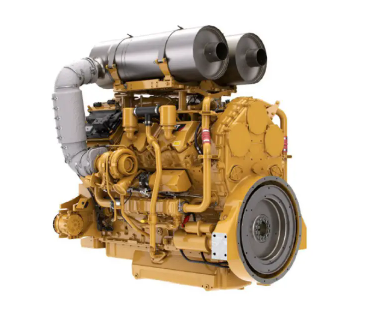
The application range associated with the CAT C27 Diesel Engine is another major reason for its value. It is commonly linked with industrial uses such as material handling, construction, mining, and aircraft ground support. These are not casual or low-demand sectors. They are environments where equipment must perform under pressure, often with tight productivity expectations and limited tolerance for failure.
Construction environments demand flexibility, toughness, and dependable operation. Equipment may work on rough terrain, in changing weather, and under varying material loads. Machines in this sector must support lifting, transport, earthmoving, and jobsite support tasks while keeping project schedules on track. The CAT C27 Diesel Engine supports this kind of equipment by providing the power and durability needed for sustained heavy-duty use.
Mining is one of the clearest examples of where engine quality directly affects business results. Mining equipment often works in harsh, high-load environments where downtime can disrupt production and raise operating costs quickly. In these conditions, the CAT C27 Diesel Engine is relevant because it is positioned for high-output industrial work and long-term durability, two qualities that matter deeply in mining operations.
Material handling equipment must move large volumes efficiently, consistently, and safely. In industrial yards, terminals, processing facilities, and heavy logistics environments, equipment needs reliable power for repeated tasks that may seem routine but place constant demand on the machine. The CAT C27 Diesel Engine supports this kind of work by helping maintain steady operational performance over long duty cycles.
In industrial business terms, reliability is one of the most important forms of performance. A machine that delivers high output but suffers from frequent interruptions is not truly high-performing. Reliable operation is what turns engine capability into usable productivity.
The CAT C27 Diesel Engine is often described in terms of reliable, quiet, and durable power. This matters because industrial equipment buyers are not only purchasing an engine. They are purchasing predictable operating hours, manageable maintenance planning, and stronger confidence in machine availability.
Every hour of unexpected downtime has consequences. A machine out of service may delay material movement, interrupt a construction sequence, reduce mining throughput, or affect related equipment in the workflow. In many heavy-duty operations, a single failure can have a ripple effect across the site.
An engine platform known for durability and proven industrial design helps reduce this risk. The CAT C27 Diesel Engine supports high-performance industrial equipment because it is intended to help machines stay available for work, which is one of the clearest indicators of value in heavy-duty applications.
Industrial equipment is a capital asset, and buyers think in terms of years, not days. The engine plays a major role in protecting that asset value. A durable diesel engine supports longer service life, more consistent operating confidence, and better return on equipment investment. This makes the CAT C27 Diesel Engine attractive not only for immediate machine performance, but also for long-term ownership value.
High-performance equipment must also make economic sense. For many industrial operations, fuel is one of the largest recurring operating costs. This is especially true in equipment fleets where multiple machines run for long shifts over long project durations. That is why fuel efficiency remains an essential part of engine selection.
The CAT C27 Diesel Engine is associated with fuel efficiency as one of its important benefits. In industrial terms, fuel efficiency does not simply mean using less fuel under all conditions. It means supporting productive work with an optimized balance between power delivery and consumption. The goal is not to minimize output, but to achieve the required performance without waste.
The more intensively equipment is used, the more fuel efficiency matters. In mining, construction, and material handling, utilization rates are often high enough that even modest improvements in fuel performance can influence total operating cost substantially over time. An engine that combines strong output with thoughtful fuel performance becomes more valuable the longer and harder it is used.
That is one reason the CAT C27 Diesel Engine supports high-performance industrial equipment so effectively. It helps operators pursue strong productivity without losing sight of lifecycle cost control.
Industrial equipment today relies increasingly on smarter system management. High-performance machinery often includes integrated electronics, monitoring systems, and application-specific control logic that allow the equipment to work more efficiently and more predictably. An engine that can support these systems has a clear advantage in modern industrial design.
The CAT C27 Diesel Engine is associated with a control system that includes features such as:
Electronic control system
Engine-mounted wiring harness
Automatic altitude compensation
Power compensation for fuel temperature
Configurable software features
SAE J1939 engine monitoring, broadcast, and control
These features are more than technical details. They show that the engine is designed to work as part of a broader machine system rather than as an isolated mechanical unit.
In heavy-duty equipment, stable control matters. Machine response, monitoring, and serviceability are all influenced by the engine’s ability to communicate and adapt. Features such as configurable software and J1939 compatibility help support this integration, making it easier for manufacturers and operators to align engine behavior with machine requirements.
Altitude compensation and fuel temperature compensation also improve practical performance. Industrial machines often work in changing environments, and engines must maintain usable power across those variations. These features help protect engine performance in real sites rather than idealized test conditions, which is exactly what high-performance equipment requires.
The standard system features commonly linked with the CAT C27 Diesel Engine further explain its suitability for high-performance industrial equipment.
The engine is associated with a turbocharged, air-to-air aftercooled arrangement. For industrial equipment, this type of configuration supports efficient air management and helps maintain strong performance under load.
Its cooling profile includes thermostats and housing with vertical outlet, a centrifugal jacket water pump, and an inlet water pump. Cooling quality is essential in industrial machinery because sustained high-load operation creates substantial thermal demand. A reliable cooling setup supports engine stability, efficiency, and durability over long work periods.
The engine is commonly linked with MEUI injection, a secondary fuel filter (2 micron), a fuel transfer pump, and an electronic fuel priming system. These features are important because fuel delivery precision and filtration quality have a direct impact on combustion efficiency, operational consistency, and long-term engine health.
The availability of SAE No. 0 or SAE No. 1 flywheel housing options supports industrial adaptability. Compatibility matters when integrating an engine into different equipment platforms, and this flexibility strengthens the engine’s usefulness for OEMs and equipment solution providers.
Not every industrial engine is equally suitable for every category of machinery. Equipment selection is always about fit. The CAT C27 Diesel Engine is especially relevant in equipment segments where the combination of high output, endurance, control, and emissions compliance creates real business value.
OEMs need engines that can support the intended machine class without creating unnecessary integration risk. The CAT C27 Diesel Engine offers a strong specification profile for builders developing heavy-duty industrial equipment where high-performance operation is a core selling point.
Dealers benefit from products with clear application stories. Because the C27 is strongly associated with construction, mining, material handling, and other industrial uses, it is easier to position in commercial discussions with customers looking for serious power solutions.
End users want a combination of machine productivity, durability, manageable maintenance, and cost control. The CAT C27 Diesel Engine supports these priorities by combining substantial output with industrial-grade reliability and system-oriented features.
Another reason the CAT C27 Diesel Engine remains highly relevant is its association with U.S. EPA Tier 4 Final emissions compliance. In modern industrial markets, emissions capability is not just a regulatory checkbox. It affects where machines can be sold, how they are positioned, and which customers can consider them.
For equipment suppliers and buyers serving advanced industrial markets, a Tier 4 Final-aligned engine strengthens product competitiveness. It suggests a higher level of emissions performance and supports use in applications where regulatory expectations are more demanding. This gives the engine additional strategic value in global industrial equipment planning.
The CAT C27 Diesel Engine supports high-performance industrial equipment because it brings together the qualities that serious machinery needs most: strong output, stable working performance, industrial durability, fuel-efficiency value, advanced control capability, and application versatility. It is not just an engine for starting a machine and keeping it moving. It is an engine platform that helps equipment perform at a higher level across long-duty, high-load, real-world industrial operations.
For businesses involved in construction, mining, material handling, or other demanding heavy-duty sectors, selecting the right engine is closely tied to machine productivity and long-term asset value. The CAT C27 Diesel Engine stands out because it supports both. And when sourcing industrial engines, mining vehicles, or related spare parts, choosing the right supply partner is equally important. Hambition Drivetrain Components & Parts Co., Ltd focuses on one-stop solutions for mining vehicles and spare parts, covering products such as scooptrams, dumpers, drill rigs, scalers, man buses, service trucks, and key heavy-duty components. With more than 20 years of industry experience and an international service network, Hambition helps global customers source practical, performance-oriented equipment and parts solutions for demanding industrial and mining applications.
The CAT C27 Diesel Engine is commonly used in heavy-duty industrial applications such as construction equipment, mining machinery, material handling equipment, and aircraft ground support systems. It is designed for applications that require high power output and dependable long-term performance.
The engine is associated with a power range of 597–783 bkW (800–1050 bhp) at 1800 rpm. This makes it suitable for equipment that needs substantial, stable power in demanding industrial environments.
It is suitable because it combines strong output, durable industrial design, fuel-efficiency value, modern electronic control features, and application flexibility. These factors help equipment maintain productivity, reliability, and operational stability in demanding work conditions.
Yes. The CAT C27 Diesel Engine is commonly associated with U.S. EPA Tier 4 Final emissions compliance, which makes it relevant for industrial applications where stricter environmental standards are required.
Buyers should consider power matching, application type, emissions requirements, system integration, spare parts support, and supplier experience. A knowledgeable supplier can help match the engine and related components to the equipment’s operating environment and long-term service needs.
