
- All
- Product Name
- Product Keyword
- Product Model
- Product Summary
- Product Description
- Multi Field Search



Views: 0 Author: Site Editor Publish Time: 2026-07-29 Origin: Site


Equipment downtime caused by ordering incorrect components drains operational budgets rapidly. Many technicians attempt to order replacements based on visual similarity or incomplete equipment specifications. This approach frequently fails. Engines undergo mid-production revisions regularly. Two engines sharing the exact same model year and displacement often require entirely different internal components. Relying on the equipment make, model, and year alone is statistically likely to result in fitment failures, delayed repairs, and compounding mechanical damage.
The only verifiable method for procuring exact-fit components is cross-referencing the specific engine model, serial number, and arrangement code. Manufacturers track every single component installed on the assembly line through these unique identifiers. By utilizing authoritative manufacturer databases or certified aftermarket catalogs, you bypass the guesswork. This process ensures you receive the correct iteration of the required component, minimizing equipment downtime and protecting your mechanical assets from catastrophic failure.
Visual Matching is High-Risk: Ordering engine parts based on appearance or basic equipment model leads to high return rates, extended downtime, and potential catastrophic engine failure.
The Serial Number is the Source of Truth: The engine data plate (containing the serial number, model, and arrangement code) dictates the exact build sheet of the engine as it left the factory.
Supersession is Common: Part numbers frequently update or supersede; a serial number ensures you receive the most current, manufacturer-approved iteration of the required component.
Supplier Verification is Critical: Reputable suppliers require serial numbers to validate fitment and preserve warranty coverage.
The baseline requirement for ordering replacement components is 100% first-time fitment accuracy. Equipment sits idle when technicians wait for replacement shipments. Every hour a machine remains out of service translates directly to lost production. Achieving first-time fitment accuracy requires abandoning visual identification methods entirely. You must rely strictly on factory-assigned identification numbers to verify component compatibility before placing an order. Mechanics in the field know that eyeballing a water pump or a turbocharger flange is a guaranteed way to stall a rebuild.
When you pull a cylinder head off a block, the naked eye cannot detect a 0.010-inch difference in valve recession or a slight shift in the injector cup seating angle. These microscopic differences dictate whether an engine runs for another ten thousand hours or drops a valve in the first ten minutes of operation. We see this constantly in heavy equipment repair. A technician assumes a part fits because the bolt holes line up, completely ignoring the internal fluid dynamics or thermal expansion rates engineered into the specific arrangement number.
External housings often remain identical across multiple production years. Engine blocks, cylinder heads, and timing covers share the same external casting molds to save manufacturing costs. However, the internal machining changes frequently. A cylinder head might look identical on the outside but feature different injector seat angles or valve guide diameters. Ordering Engine Parts based on external appearance ignores these critical internal tolerances. Installing a component with incorrect internal dimensions leads to immediate mechanical failure upon startup.
Consider the common scenario of replacing a fuel injector. Two injectors might share the exact same outer body and electrical connector. Yet, one is calibrated to deliver fuel at 28,000 psi for a specific emissions profile, while the other delivers 32,000 psi. If you install the wrong one based on looks, you will wash down the cylinder walls with excess fuel, dilute the engine oil, and spin a main bearing. Visual matching is a gamble you will eventually lose.
Manufacturers constantly update components to resolve engineering flaws or comply with shifting emissions standards. These updates happen mid-year without changing the overarching engine model designation. A manufacturer might switch from a two-piece piston design to a single-piece forged steel piston halfway through a production run. They might alter the oil pump gear ratio to improve lubrication. If you order parts based solely on the model year, you risk receiving the pre-update component for a post-update engine block.
We frequently encounter this with heavy-duty diesel platforms. An engine built in March might use a specific camshaft profile, while the exact same model built in October uses a revised camshaft to reduce exhaust gas temperatures. The only way to know which camshaft belongs in your block is by checking the serial number against the factory build sheet. Guessing based on the year stamped on the chassis guarantees you will eventually order obsolete or incompatible hardware.
The financial impact of ordering the wrong parts extends far beyond the initial purchase price. You face immediate return shipping fees and supplier restocking fees. Your technicians lose valuable labor hours attempting to install incompatible components. Furthermore, forced fitment causes severe secondary damage. Torquing down a mismatched cylinder head gasket can warp the block deck or allow coolant to mix with engine oil. Accurate identification prevents these compounding mechanical and financial disasters.
Visual Matching vs. Serial Number Verification | |||
Procurement Method | Fitment Accuracy | Risk of Secondary Damage | Average Downtime Impact |
|---|---|---|---|
Visual Matching | Low (Below 50%) | Extremely High | Extended (Multiple shipping cycles) |
Make/Model/Year Only | Moderate (60-70%) | High | Moderate (Frequent returns) |
Serial & Arrangement Number | Guaranteed (100%) | Zero (If installed correctly) | Minimal (First-time fix) |
Commercial diesel engines utilize standardized identification plates. You must locate these plates to extract the necessary data for accurate parts procurement. On Caterpillar engines like the C15, the data plate typically sits on the passenger side of the engine block or the valve cover. Caterpillar uses a distinct alphanumeric format, usually starting with a three-character prefix followed by seven digits. This prefix is mandatory for identifying the correct generation of the engine block.
Cummins engines, such as the ISX series, feature data plates mounted on the rocker housing or the front gear cover. Cummins relies on an eight-digit numerical sequence. Detroit Diesel engines, including the DD15, often have the plate attached to the intake manifold or the side of the cylinder block. Navistar engines place their identification tags on the valve cover or the front timing cover. You must clean these plates carefully with a rag and mild solvent to read the stamped numbers without scratching the metal surface.
When you are out in the field, these plates are usually covered in years of grease, dirt, and sometimes layers of aftermarket paint. Do not use a wire wheel or aggressive abrasives to clean the plate, as you will erase the stamped numbers. Use brake cleaner and a soft nylon brush. If the plate is completely illegible, you will need to look for secondary stampings on the block itself, usually located near the rear bell housing flange or machined flat spots above the oil pan rail.
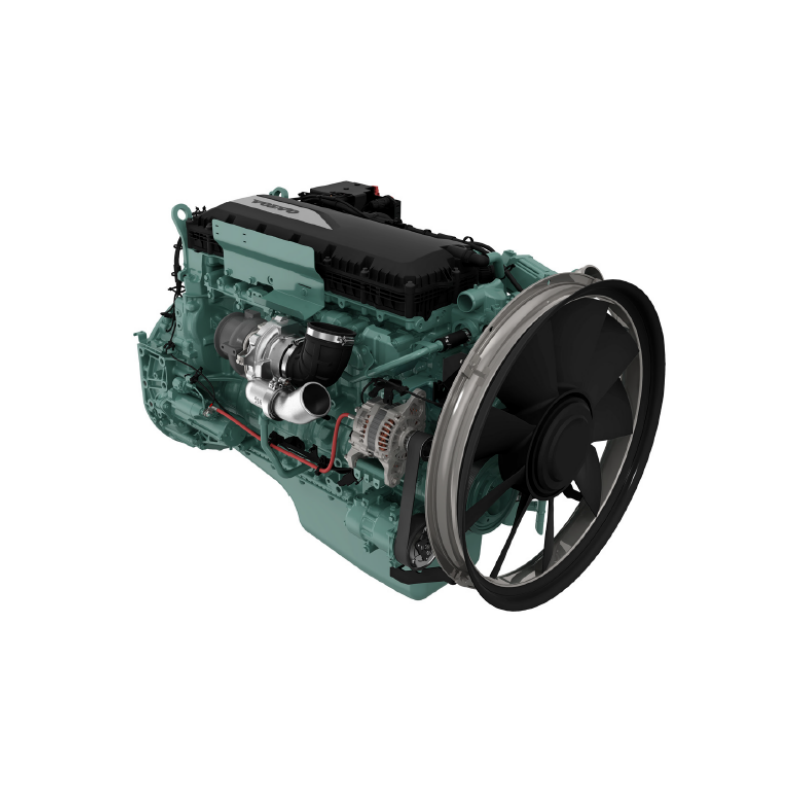
Industrial power units and marine engines operate in harsh environments that often obscure identification tags. When sourcing components for a Volvo Penta TAD853VE Engine, you must locate the specification decal. This decal usually resides on the valve cover. Additionally, a riveted metal plate sits directly on the engine block. You need both the product number and the serial number from these locations.
Specialized industrial power units distinguish heavily between the product number and the serial number. The product number identifies the base engine configuration. The serial number identifies the specific unit built on the assembly line. Marine applications often feature secondary tags on the heat exchanger or the marine gear. You must prioritize the primary engine block tag over these secondary component tags when ordering internal engine components.
Marine environments introduce severe corrosion. Saltwater degrades aluminum data plates rapidly. If you are working on a marine application and the plate is corroded beyond recognition, you must rely on the engine control module (ECM) data or original commissioning paperwork. Never assume a marine engine shares internal components with its on-highway counterpart, even if they share the same base displacement. Marine engines utilize entirely different piston cooling nozzles, camshaft profiles, and raw water pump drives.
Small engines require a different approach to identification. Manufacturers like Briggs & Stratton, Honda, and Kohler do not always use riveted metal plates. Instead, they stamp the identification numbers directly into the metal components. On push mowers and turf equipment, you will find these numbers stamped into the blower housing, the muffler heat shield, or the overhead valve cover.
You must distinguish between the Model, Type, and Code designations on these small engines. The Model number identifies the basic engine family. The Type number specifies the exact mechanical configuration, including crankshaft length and alternator output. The Code number indicates the exact date of manufacture. You need all three sequences to access the correct parts diagrams for small equipment repairs.
Locate the stamped numbers on the blower housing or valve cover.
Write down the Model, Type, and Code exactly as they appear, including any dashes or spaces.
Input this complete sequence into the manufacturer's specific parts lookup tool.
Verify the crankshaft orientation (vertical or horizontal) matches the diagram before ordering internal components.
Understanding the anatomy of a data plate ensures accurate procurement. The serial number identifies the specific, individual unit as it moved down the assembly line. It acts as the engine's unique fingerprint. However, the arrangement number dictates the exact configuration of components used in that specific build. Two engines with sequential serial numbers can have entirely different arrangement numbers if one was built for a generator set and the other for an articulated truck.
You cannot order internal components using only the serial number. The parts catalog requires the arrangement number to filter out incompatible piston profiles, camshaft lifts, and fuel injector flow rates. The arrangement number connects the bare engine block to the specific accessory drive systems, turbocharger mountings, and oil pan profiles required for the equipment's intended application.
Think of the serial number as the engine's social security number, while the arrangement number is its job description. A 9-liter engine block can be configured to run a water pump at a constant 1800 RPM or power a front-end loader with massive variable RPM swings. The arrangement number tells the parts system exactly which heavy-duty components were installed to handle those specific operational stresses.
Prefix codes determine the manufacturing plant and the specific generation of the engine family. A prefix code change indicates a major shift in emissions compliance hardware or internal block casting methods. You must provide the prefix code to your supplier to ensure you receive emissions-compliant components. Installing pre-emissions parts on a post-emissions engine block violates federal regulations and guarantees immediate mechanical failure.
Build dates embedded in the data plate help trace mid-year production changes. If a manufacturer updated a water pump design in October, knowing your engine was built in November confirms you need the updated water pump housing. Decoding these dates prevents the frustration of ordering superseded parts that no longer fit the current engine configuration.
Common Data Plate Elements and Their Functions | ||
Data Element | Primary Function | Procurement Importance |
|---|---|---|
Serial Number | Identifies the exact unit | Required for warranty and exact build sheet access |
Arrangement/Spec Number | Defines the mechanical configuration | Filters out incompatible application-specific parts |
Prefix Code | Identifies generation and emissions tier | Ensures compliance and block compatibility |
Build Date | Pinpoints exact manufacturing timeline | Resolves mid-year part supersession conflicts |
Missing, painted-over, or illegible data plates present a significant challenge. Equipment operates in corrosive environments that degrade aluminum tags. Furthermore, previous owners frequently swap engines. A chassis vehicle identification number might indicate a 12-liter engine, but a previous owner may have installed a 15-liter commercial block. Relying on the chassis VIN in a swapped scenario guarantees you will order the wrong components.
You can mitigate this risk through several strategies. First, locate the casting numbers stamped directly into the heavy iron of the engine block and cylinder head. These casting numbers help narrow down the engine family and generation. Second, connect a diagnostic tool to the engine control module. The ECM readout usually contains the original engine serial number programmed at the factory. Third, check for secondary stampings near the oil filter housing or the rear bell housing flange. If all else fails, contact the original equipment dealer with the chassis VIN to request the factory build sheet, keeping in mind the risk of unrecorded engine swaps.
Efficiently scaling maintenance operations requires mastering parts catalogs. Original equipment manufacturer software provides the highest level of accuracy. These proprietary systems filter every available component through your specific serial and arrangement numbers. They display only the exact parts installed on your engine at the factory. This eliminates the guesswork entirely.
Third-party distributor catalogs offer a different experience. High-quality aftermarket databases map their inventory directly to OEM serial number logic. However, lower-tier aftermarket sites rely on generic application charts. You must verify that the aftermarket database you use explicitly requires a serial number for final fitment verification. If an aftermarket site only asks for the equipment make and model, the risk of receiving an incompatible part increases exponentially.
When you log into a proper parts portal, the first prompt should always be the serial number field. If you can browse pistons and bearings without entering a serial number, you are in a generic catalog. Generic catalogs are fine for ordering universal items like hose clamps or standard hardware, but they are completely inadequate for sourcing internal engine components.
Manufacturers rarely produce the exact same part number for decades. They improve designs, change material suppliers, and consolidate inventory. This process creates a supersession chain. Your original engine data plate might correspond to a water pump part number that became obsolete five years ago. You must trace this obsolete number through the manufacturer's supersession history to find the current, active replacement.
Serial-number-specific supersession chains ensure the new part remains backward compatible with your older engine block. Sometimes, a superseded part requires an additional adapter bracket or a different wiring harness connector. Authoritative parts catalogs flag these required modifications automatically. Ignoring supersession history often leads to purchasing dead-stock inventory that lacks modern engineering improvements.
Generic cross-reference charts found on unverified e-commerce sites present a massive liability. These charts often group components based on rough external dimensions rather than exact engineering tolerances. A "will-fit" bearing might have the correct inner and outer diameter but lack the proper oil clearance or crush required for your specific engine arrangement.
Relying on "will-fit" data ignores critical differences in material composition and thermal expansion rates. An aftermarket piston might fit the cylinder bore perfectly but melt under the exhaust gas temperatures generated by your specific turbocharger configuration. You must avoid generic cross-references entirely. Demand exact serial number validation for every component you purchase.
Choosing a supplier involves balancing cost, availability, and engineering exactness. OEM components guarantee exact fitment and maintain factory performance specifications. However, they often carry a premium price tag and may suffer from regional backorders. Genuine aftermarket parts provide a viable alternative. High-tier aftermarket manufacturers hold ISO certifications and reverse-engineer components to meet or exceed exact OEM specifications.
White-label parts sourced from unverified overseas foundries introduce severe operational risks. These components rarely undergo strict quality control testing. They often feature inconsistent machining tolerances and inferior metallurgy. You must define what makes an aftermarket part acceptable for your operation. Prioritize suppliers who transparently disclose their manufacturing certifications and provide full traceability for their inventory.
We have pulled apart engines that failed after 500 hours because a white-label wrist pin snapped in half. The initial savings on that cheap part evaporated instantly when the rod went through the side of the block. Stick to suppliers who stand behind their metallurgy and provide documentation proving their parts meet the original factory specifications.
Purchasing from suppliers who offer in-house technical verification is non-negotiable. A reputable supplier acts as a secondary verification layer. They require your engine serial number at checkout to guarantee fitment. If you order a part that conflicts with your serial number data, their technical support team flags the order and contacts you to correct the discrepancy.
Suppliers lacking technical support push the burden of fitment entirely onto the buyer. If you make a mistake decoding your data plate, an automated warehouse simply ships the wrong part. Partnering with suppliers who employ experienced parts technicians prevents these costly administrative errors and ensures your equipment returns to service quickly.
Installing incorrect or unverified components severely impacts manufacturer warranties. If an engine fails while under warranty, the manufacturer will dispatch an inspector to analyze the failure. If they discover a mismatched internal component or a white-label part lacking proper specifications, they will void the warranty claim immediately. You absorb the entire cost of the catastrophic engine failure.
Purchasing from authorized distributors mitigates this risk. Authorized suppliers provide components that comply with factory warranty requirements. Furthermore, reputable aftermarket suppliers offer their own comprehensive warranties that cover both the part and the progressive damage caused by a potential part failure. Always verify the warranty terms and the fitment guarantee before finalizing your procurement decision.
Locate and clean your engine data plate using non-abrasive solvents to reveal the stamped identification numbers.
Document the complete engine model, serial number, arrangement code, and any prefix designations before opening a parts catalog.
Input your serial number into an authoritative OEM catalog or a verified aftermarket database to generate an exact build sheet.
Trace any obsolete part numbers through the manufacturer's supersession history to ensure you order the most current, backward-compatible component.
Submit your serial number to your chosen supplier during checkout to secure a technical fitment guarantee and protect your warranty.
A: Replacement engine blocks often feature a new data plate riveted to the standard factory location, such as the passenger side block or timing cover. If the block was a bare casting replacement, the technician may have stamped the original serial number into a designated blank pad on the block deck.
A: No. The vehicle identification number only identifies the chassis. While a dealer can sometimes look up the original engine installed at the factory using the VIN, this method fails if a previous owner swapped the engine or altered the internal components.
A: The model number identifies the general engine family and displacement. The arrangement number specifies the exact mechanical configuration of that specific build, including turbocharger placement, oil pan profile, and accessory drive systems required for the equipment.
A: Multiple options usually indicate a mid-year production change, an updated supersession chain, or optional equipment installed at the factory. You must check the engine build date or inspect the physical component on the engine to determine which option matches your specific configuration.
A: You can locate casting numbers stamped directly into the engine block and cylinder head to identify the engine family. Additionally, connecting a diagnostic tool to the engine control module often reveals the original factory-programmed serial number.
A: Casting numbers are raised digits formed into the metal during the foundry process, usually indicating the raw block design. Serial numbers are always stamped or engraved into a machined flat surface or printed on a riveted metal tag.
A: You must trace the obsolete part number through the manufacturer's supersession database to find the active replacement. Always order the newest superseded part number, as it contains the latest engineering updates and material improvements for your engine.
