
- All
- Product Name
- Product Keyword
- Product Model
- Product Summary
- Product Description
- Multi Field Search



Views: 0 Author: Site Editor Publish Time: 2026-08-05 Origin: Site


The economics of underground excavation are shifting rapidly, driven by escalating ventilation requirements, stringent regulatory mandates, and advancements in high-capacity battery technology. Mine operators face a complex capital allocation dilemma: absorb the 60–100% higher upfront capital expenditure of battery-electric models or continue funding the compounding operational expenditures of diesel fuel, exhaust management, and mechanical maintenance. Determining the optimal powertrain requires moving beyond surface-level sustainability claims to conduct a rigorous, site-specific evaluation of infrastructure readiness, lifecycle maintenance realities, and overall fleet efficiency. Choosing the right Underground Mining Vehicle depends heavily on these localized factors. You must evaluate your specific ore body depth, existing electrical grid capacity, and long-term production goals to make an informed decision that protects your bottom line.
CapEx vs. OpEx Inversion: Electric fleets require significantly higher initial capital (60–100% premium) but reliably reduce long-term operational costs through lower energy rates and decreased mechanical wear.
The Ventilation Variable: In deep underground operations, the reduction in primary ventilation requirements is the single largest financial driver for BEV adoption, often justifying the initial premium.
Infrastructure Dependency: Diesel equipment offers unmatched operational flexibility, whereas electric fleets require extensive, pre-planned electrical infrastructure for high-capacity charging and battery swapping.
Supply Chain Maturity: Established diesel fleets benefit from highly mature aftermarket support, while electric fleets require specialized maintenance protocols and new procurement strategies for high-voltage components.
Structuring a 10-to-15-year financial model is essential when weighing initial procurement against long-term fuel or electricity costs, ventilation infrastructure upgrades, and mid-life rebuilds. Operators must calculate the cumulative financial impact of running a fleet over its entire operational lifespan. This involves projecting the degradation curves of batteries against the predictable rebuild schedules of diesel engines. A comprehensive financial model highlights the breakeven point where operational savings from an electric fleet surpass the initial capital outlay. You need to account for every filter, fluid change, and major component overhaul to get an accurate picture of lifecycle expenses.
Assessing transition feasibility requires looking across multiple equipment categories rather than evaluating haulage in isolation. A successful transition strategy encompasses haul trucks, Load-Haul-Dump loaders, drill rigs, and charge rigs. Each machine type presents unique duty cycles and energy demands. For instance, a drill rig tethered to the grid operates under different energy constraints than a free-roaming loader. Evaluating the entire fleet ensures that charging infrastructure is sized correctly and that maintenance teams are prepared for a unified technological shift.
The depth of the ore body and the remaining life of the mine heavily dictate the viability of heavy infrastructure investments. Deep-shaft operations face exponential increases in ventilation demands to clear diesel particulate matter and dissipate heat. In these environments, electric fleets offer immediate relief to ventilation constraints. Conversely, a mine nearing the end of its lifecycle may not offer a sufficient runway to recoup the high capital costs of electrical substations and charging bays, making diesel the more pragmatic choice.
Assessing the local power grid's ability to support peak charging loads is critical before committing to an electric fleet. High-capacity fast charging draws massive amounts of electricity, which can trigger exorbitant demand charges or overwhelm existing surface substations. Operations located in remote areas with weak grid connections may require localized power generation or large-scale energy storage systems to buffer peak loads. Understanding these constraints prevents costly operational bottlenecks during shift changes.
The primary advantage of diesel fleets remains their unmatched operational flexibility. Diesel machines can operate continuously across diverse headings with rapid refueling and no tethered infrastructure. This autonomy allows mine planners to reallocate equipment dynamically based on immediate production needs without worrying about proximity to charging stations. In complex, sprawling mine layouts, this mobility ensures consistent material movement and minimizes downtime associated with logistical constraints. When a heading needs immediate mucking, a diesel loader can be dispatched instantly.
While diesel offers flexibility, it imposes a severe burden on mine ventilation systems. Quantifying the costs associated with clearing diesel particulate matter, managing noxious gases, and cooling ambient air reveals a significant operational drain. Deep shafts require massive primary fans and extensive ducting to maintain safe breathing air for personnel. The thermal output of internal combustion engines further compounds this issue, often necessitating expensive refrigeration plants to keep ambient temperatures within regulatory limits.
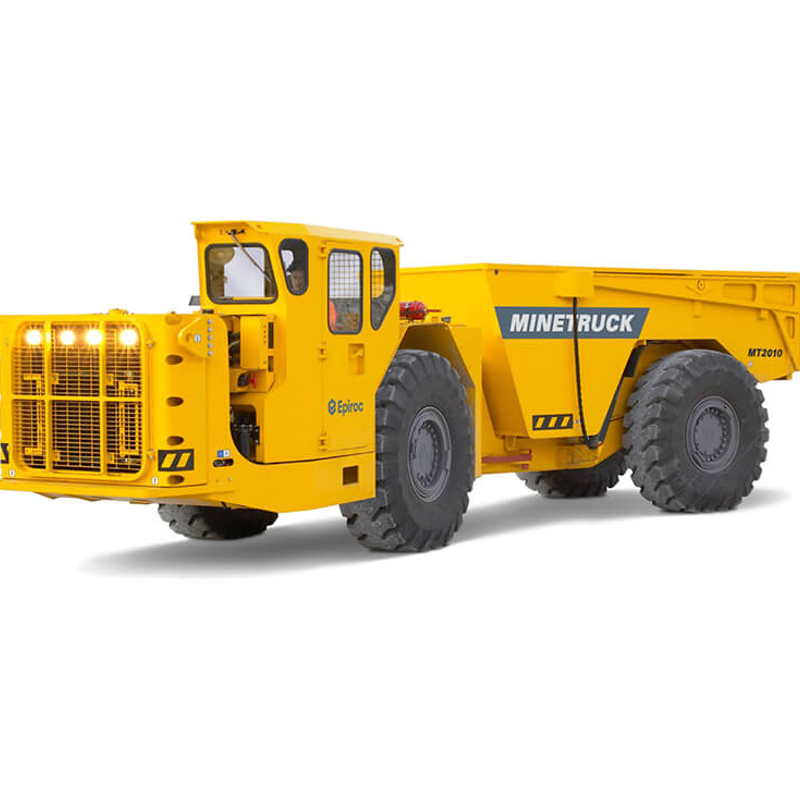
Diesel maintenance schedules are highly predictable, backed by decades of industry data. A major advantage of legacy fleets is the deep aftermarket availability for standard components. Sourcing reliable replacement parts, such as Epiroc Minetruck MT2010 Parts, ensures high uptime and extends the operational life of existing assets. Mechanics are intimately familiar with hydraulic, transmission, and engine diagnostics, meaning repairs can be executed swiftly without requiring specialized high-voltage training.
Field data indicates electric fleets can operate significantly longer between scheduled maintenance intervals. Some studies show electric vehicles remaining operational for up to 11 hours more than their diesel counterparts before requiring shop time. This increased uptime stems from mechanical simplicity; electric motors have a fraction of the moving parts found in internal combustion engines. The absence of engine oil, fuel filters, and complex exhaust systems directly translates to fewer failure points and higher mechanical availability.
The elimination of diesel engine systems yields an estimated 30–40% reduction in ongoing maintenance costs. Electric drivetrains experience less vibration and generate less ambient heat, which reduces wear on surrounding hydraulic and structural components. Regenerative braking systems also significantly extend the life of friction brakes, lowering consumable costs. Over a ten-year lifecycle, these incremental savings accumulate into a substantial financial advantage for electric fleets.
Modern battery-electric vehicles represent a massive leap forward from legacy, tethered electric loaders. Early electric machines relied on cumbersome trailing cables, severely limiting their range and maneuverability. Today's battery technology allows for untethered operation, matching the mobility of diesel units while delivering superior torque and acceleration. This evolution has expanded the application of electric machines from fixed-route loading to dynamic, mine-wide haulage.
Despite their efficiency, battery-electric fleets carry hidden costs that must be factored into deployment strategies. Battery degradation is an inevitable reality; operators must plan for expensive battery pack replacements midway through the vehicle's lifecycle. Furthermore, high-voltage systems require specialized tooling, isolated maintenance bays, and extensive technician retraining. The logistical complexity of managing battery swapping stations also demands precise operational choreography to avoid shift delays.
While operational greenhouse gas emissions are zero, the environmental trade-offs require a broader perspective. The manufacturing footprint of heavy-duty battery-electric vehicles generates up to five times more greenhouse gases than diesel counterparts during the production phase. The extraction and processing of lithium, cobalt, and nickel carry significant environmental weight. Operators must evaluate these lifecycle emissions against the localized benefits of zero tailpipe output to present an accurate sustainability profile.
Evaluation Metric | Diesel Fleet | Battery Electric Fleet (BEV) |
|---|---|---|
Upfront Capital Expenditure | Standard baseline cost | 60–100% higher initial premium |
Energy / Fuel Costs | High, volatile fuel logistics | Up to 70% reduction via local electricity |
Ventilation Requirements | High (requires DPM clearance & cooling) | Low (zero exhaust, minimal heat) |
Infrastructure Needs | Standard fuel bays and lube stations | High-capacity charging & battery swap stations |
Maintenance Costs | Baseline (frequent fluid & filter changes) | 30–40% reduction (fewer moving parts) |
Comparing the volatile costs of transporting diesel fuel underground against localized electricity rates highlights a stark contrast in energy economics. Delivering diesel to deep underground fuel bays involves complex logistics, specialized transport vehicles, and inherent fire risks. Electric powertrains bypass this supply chain entirely, drawing power directly from the mine's electrical grid. This shift can reduce direct energy costs by up to 70%, insulating operations from global oil market fluctuations.
The spatial requirements for supporting these fleets differ drastically. Underground diesel fuel bays require robust fire suppression systems, spill containment, and specific ventilation routing. Conversely, automated battery-swapping stations and fast-charging nodes demand clean, climate-controlled environments and massive electrical conduits. Designing these high-voltage infrastructure footprints requires early integration into the mine plan, as retrofitting existing drifts for battery stations can be prohibitively difficult.
Electric vehicles offer a profound improvement in operator ergonomics. The elimination of diesel exhaust immediately improves localized air quality. Furthermore, electric motors generate significantly less noise and vibration than internal combustion engines. This reduction in physical stress lowers operator fatigue, improves focus, and mitigates long-term occupational health liabilities. Improved working conditions also serve as a strong retention tool in a highly competitive labor market.
Avoiding operational bottlenecks during a technological shift requires meticulous planning. Running a mixed fleet in parallel allows operators to maintain production targets while gradually integrating new technology. Targeted operator retraining is critical; driving an electric loader with regenerative braking requires different techniques than operating a traditional diesel machine. Phasing the rollout ensures that the maintenance team and operators adapt without compromising daily tonnage.
Audit existing electrical infrastructure to determine maximum load capacity.
Identify specific ventilation-constrained zones ideal for initial BEV deployment.
Develop a comprehensive retraining program for operators and maintenance technicians.
Establish parallel maintenance protocols for both diesel and high-voltage systems.
Mitigating supply chain risks is paramount for both new and legacy fleets. For electric vehicles, securing long-term service agreements for high-voltage components ensures predictable uptime. Simultaneously, operations must maintain a robust inventory for existing Mining Equipment to prevent stranded assets. Ensuring a steady supply of critical replacement parts prevents premature fleet obsolescence while the broader electric transition takes place.
A complete, sudden overhaul of a mine's fleet introduces unacceptable levels of operational risk. Frameworks for phased adoption involve testing battery-electric vehicles in specific, ventilation-constrained zones first. This localized deployment allows management to validate OEM performance claims against actual rock conditions and duty cycles. Once the infrastructure and maintenance protocols are proven in a controlled zone, the operation can confidently scale the electric fleet mine-wide.
Initiate a comprehensive site energy and ventilation audit to quantify current baseline costs and identify constraints.
Develop a lifecycle financial model that accurately projects battery degradation and replacement cycles against diesel rebuild schedules.
Launch a pilot program utilizing a single electric loader or truck to validate manufacturer performance claims in your specific rock conditions.
Secure long-term supply chain agreements for both high-voltage electric components and critical legacy diesel parts.
A: Yes, over the long term. While they require a higher initial investment, electric vehicles can reduce energy costs by up to 70% and lower maintenance expenses by 30–40% due to fewer moving parts and the elimination of diesel fuel logistics.
A: Battery-electric vehicles typically require a 60–100% higher initial capital expenditure compared to standard diesel equipment. This premium accounts for the advanced battery packs, electric drivetrains, and specialized software systems.
A: Yes. Electric motors have significantly fewer moving parts than internal combustion engines. They eliminate the need for engine oil changes, fuel filters, and exhaust system repairs, resulting in longer intervals between scheduled maintenance.
A: The manufacturing phase of heavy-duty battery-electric vehicles generates up to five times more greenhouse gases than producing a diesel counterpart. This is primarily due to the energy-intensive extraction and processing of battery minerals like lithium and cobalt.
A: Ventilation is often the deciding factor. Diesel engines emit particulate matter and massive heat, requiring expensive, high-capacity ventilation systems. Electric vehicles produce zero exhaust and minimal heat, drastically reducing the capital and operational costs of mine ventilation.
A: Yes, many operations successfully run mixed fleets during a transition phase. However, this requires managing two separate maintenance protocols and ensuring that both diesel fueling bays and electrical charging infrastructure are adequately supported.
A: It is generally straightforward. Established diesel fleets benefit from a highly mature global supply chain. Standard components and aftermarket parts are widely available, ensuring high uptime and predictable maintenance schedules for legacy machines.
